

Spiral Conveyors
Gravity Roller Spiral Conveyor
Unpowered rollers set along a spiral track, carrying rigid goods downwards without a drive and without power.
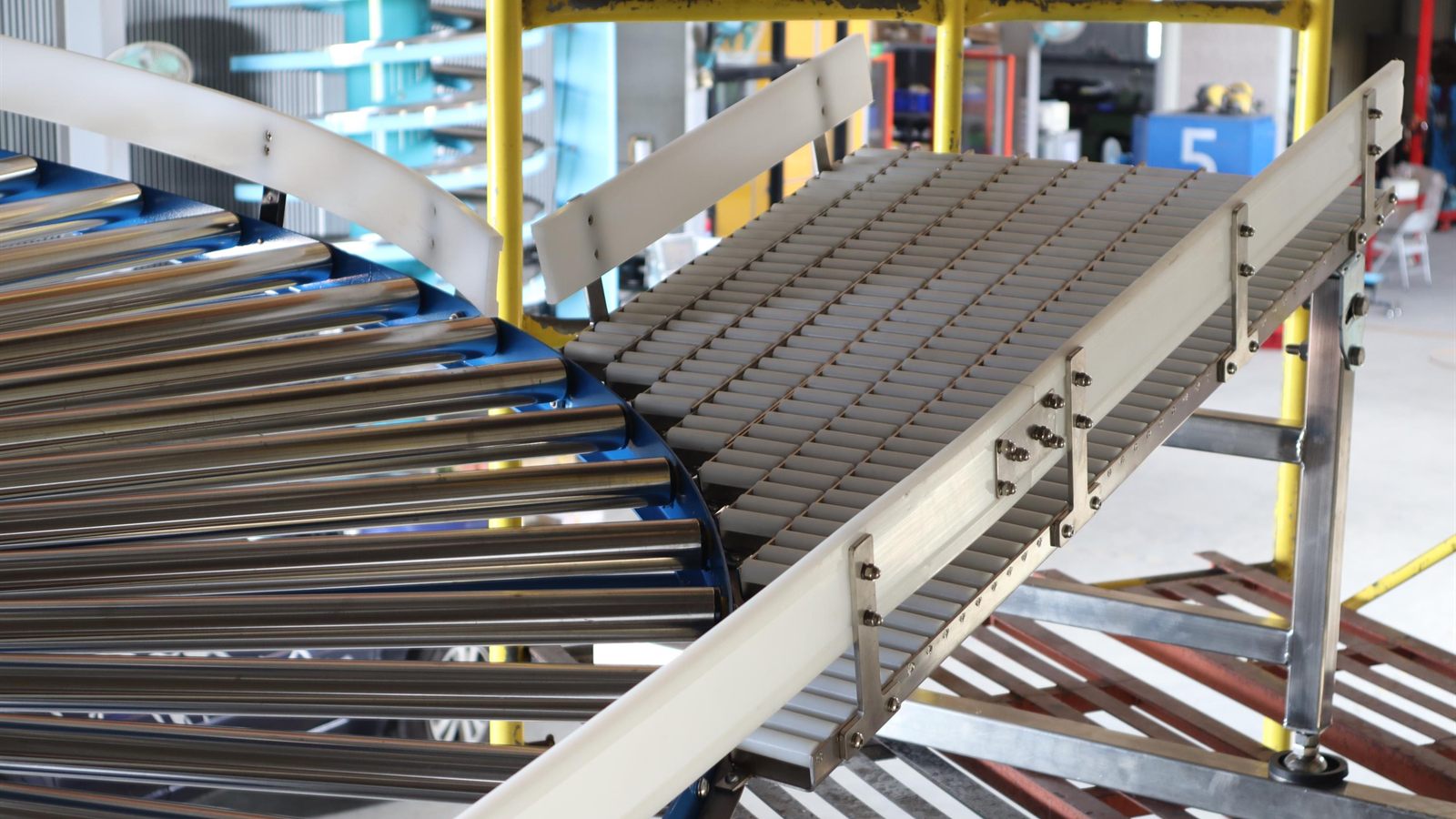
The machine
Goods travel down the rollers under their own weight.
It is not the machine for goods that have to go up, or for a descent that has to be driven and speed-controlled.
Best suited for
- Moving cartons, plastic crates, boxes and other rigid packaging downwards
- High-rise buildings, and any descent where a driven spiral would spend power on what gravity does
-
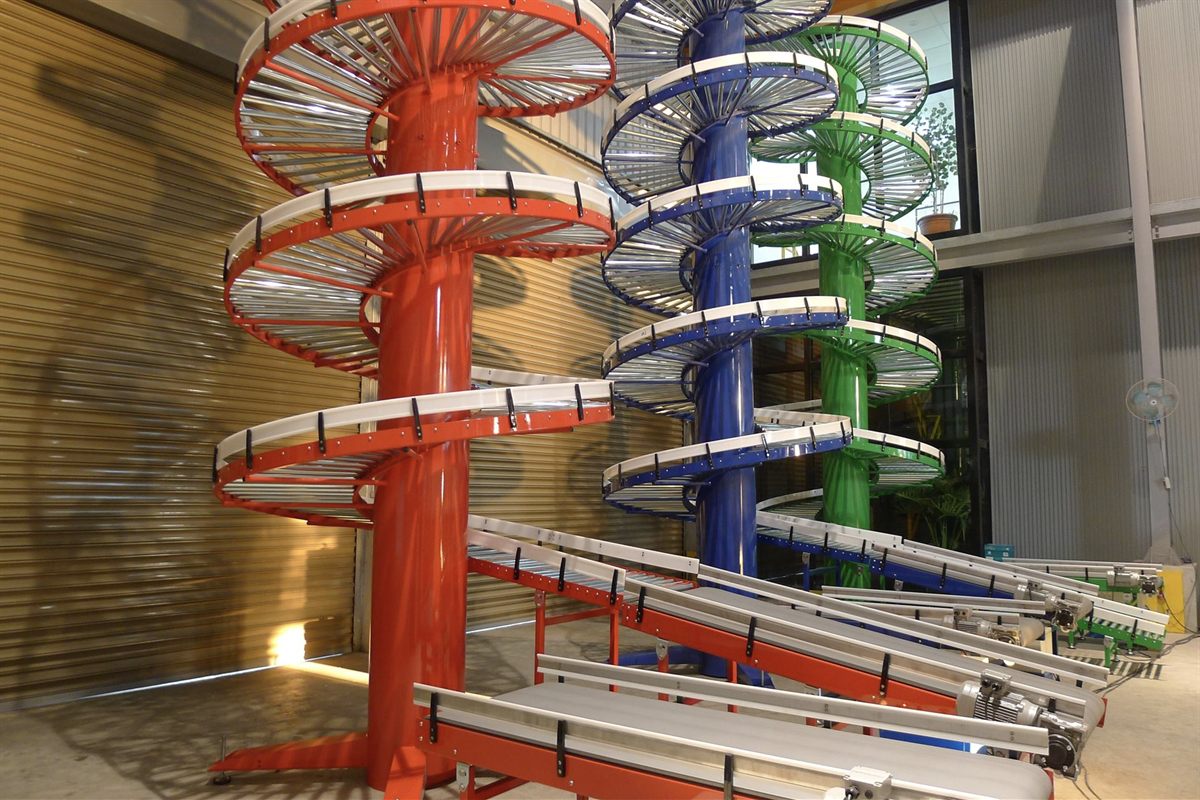
On site
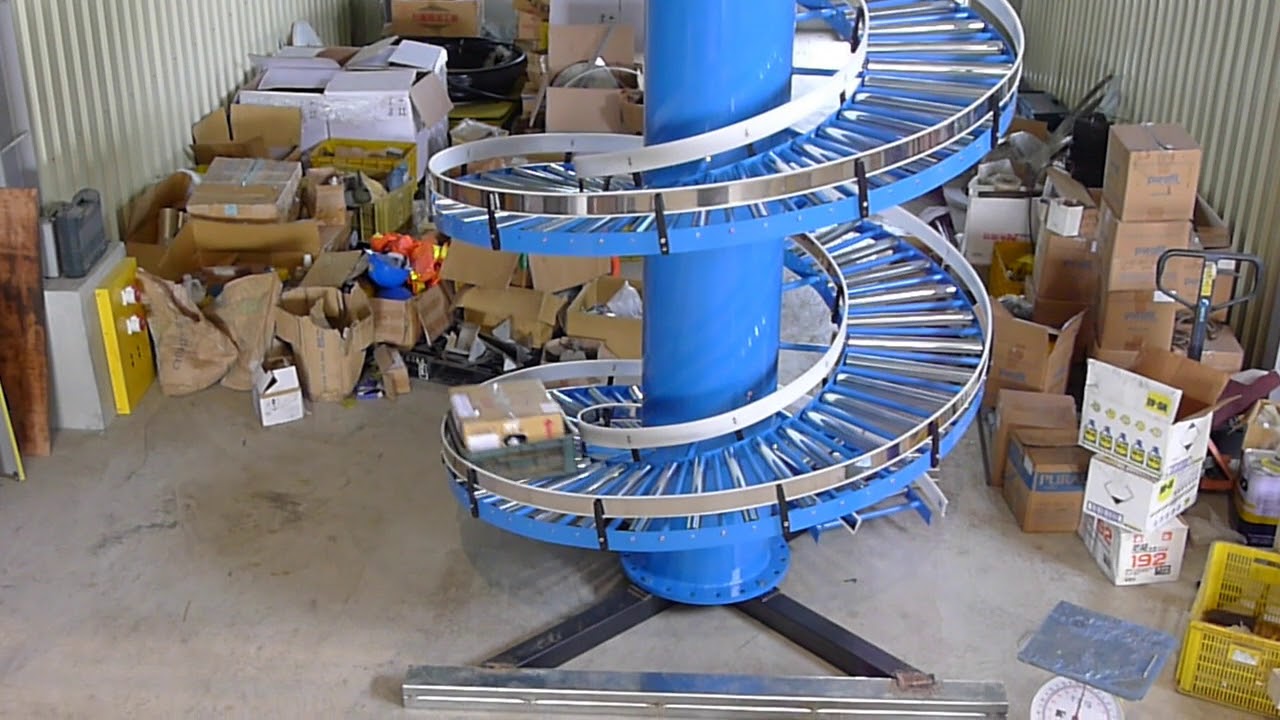
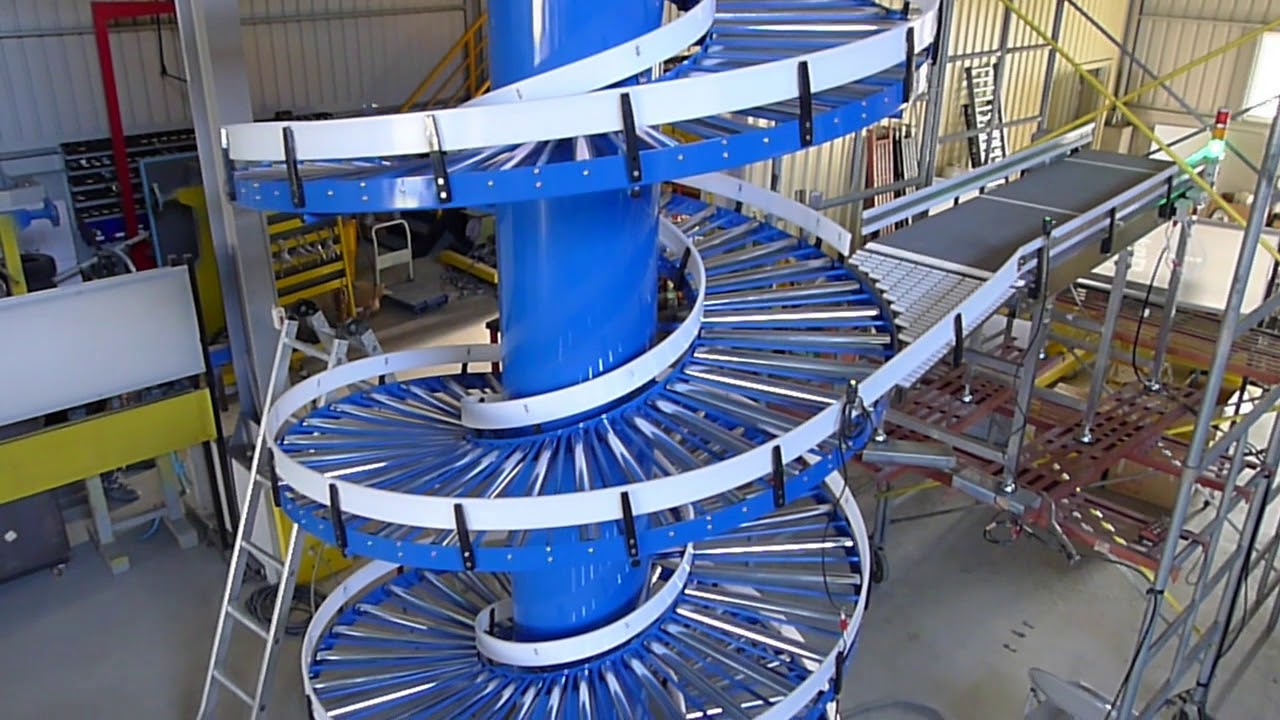
A gravity roller spiral installed and running.
-
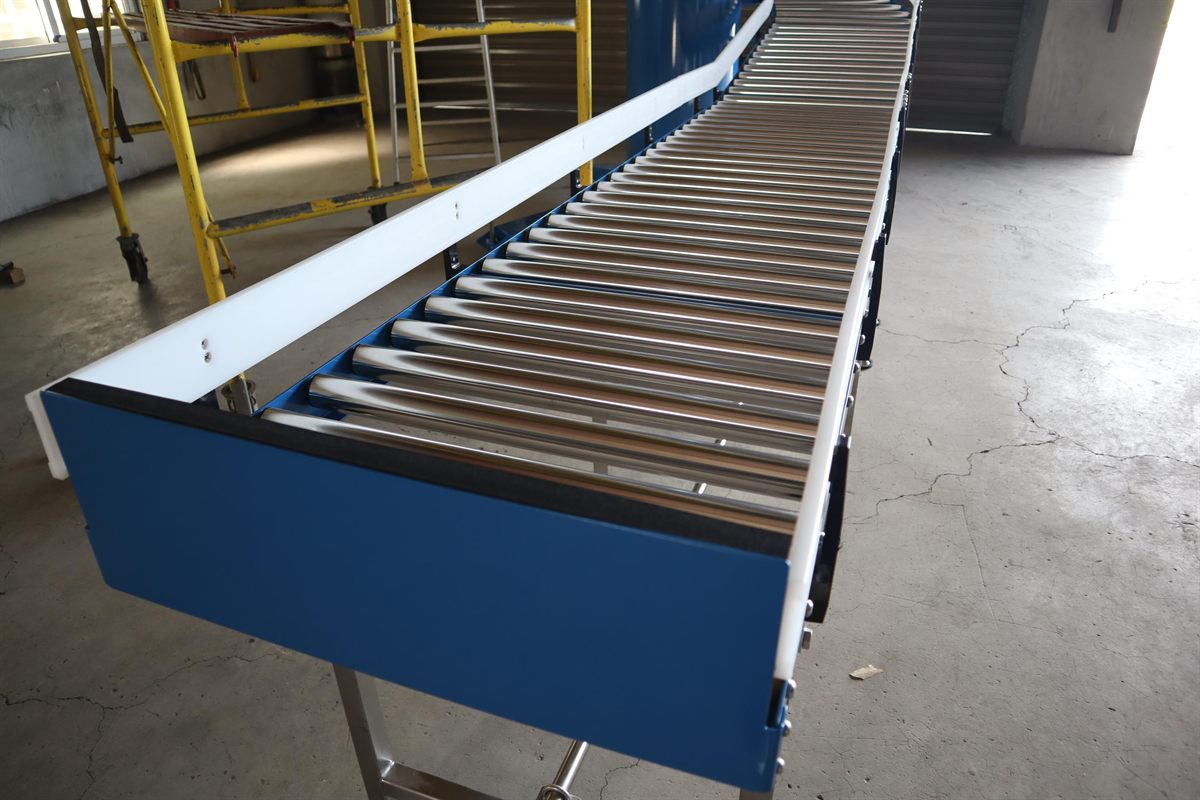
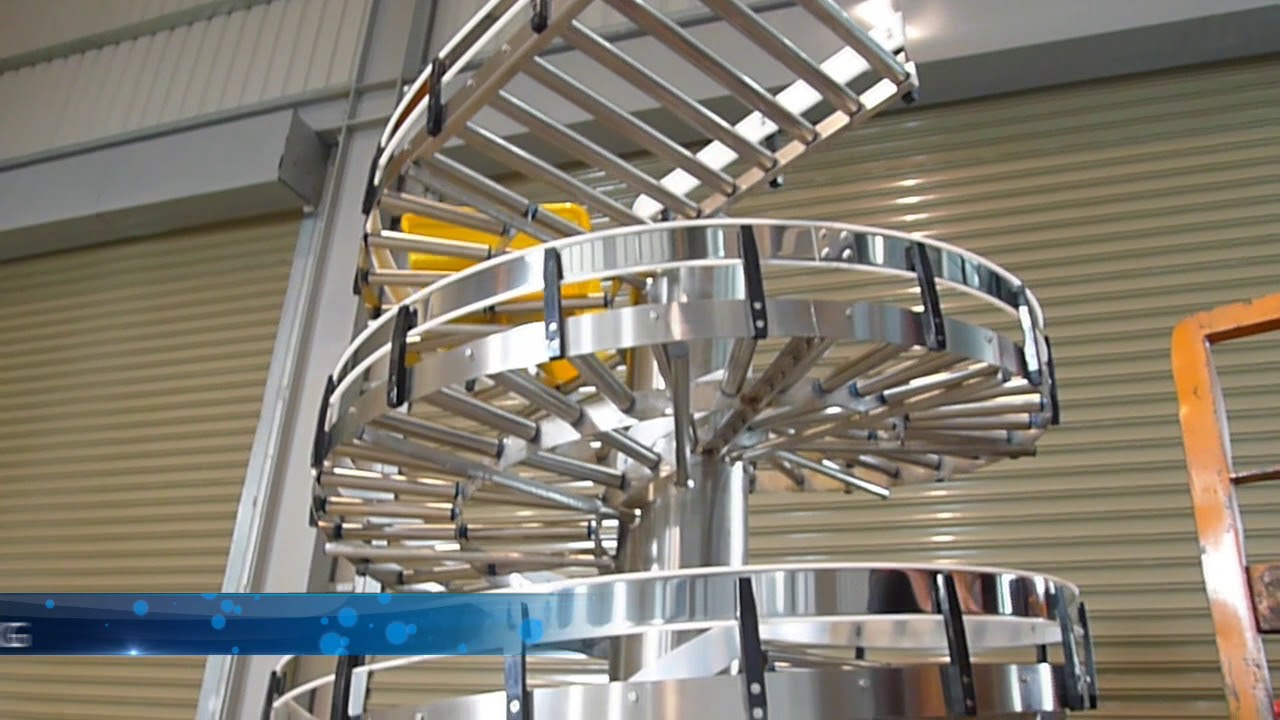
Unpowered rollers
Rollers set along the spiral track. Goods travel down them without a drive.
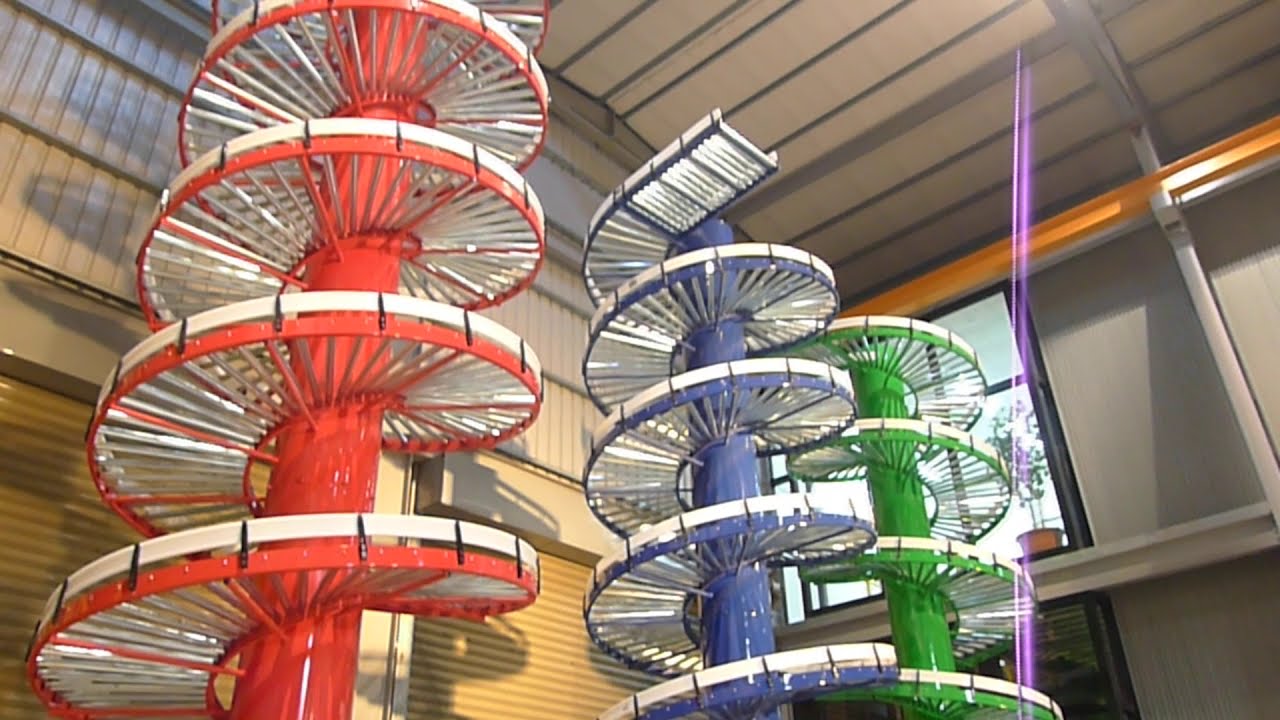
Technical data
Specifications and options
Confirm every figure against your application.
Specifications
- Direction
- Downwards only
- Drive
- None. Unpowered rollers along the spiral, with no power consumption
- Sizing
- Outer diameter, number of layers and incline angle are designed to the product size and the space available Track width and number of layers are customised.
- Braking
- Products move to the outer side and rub against the HDPE side guard, which slows them An additional brake device is generally not needed.
- Frame
- Painted mild steel as standard; stainless steel on request For mild steel, the paint colour is specified by RAL.
- Side guard
- 10 mm HDPE on the side guard, acting as a friction-resistant protective wall
- Multi-entry
- Available, using sensors and other electronic controls On request.
- Maintenance
- Simple and regular maintenance only, because the frame structure is simplified
Roller types
- Single-row free roller
- The standard type. Products slide down against the outer side guard, so they do not stay in the centre of the track
- Multi-row free roller
- Not the standard type. Products move in a circular motion and slide down within the centre of the track Products descend at high speed: NEXUS states that this type is not suitable for fragile products.
Inlet & outlet configurations
Choose the inlet and outlet arrangement to suit your line.







Discuss your application
Send us the product dimensions and weight, required throughput, elevation change, available footprint and the equipment at either end. NEXUS will configure the conveying system around your line.